Audi 2.0 TFSI Problems: Oil Consumption, Timing Chain and Repair Costs
- November 10, 2026
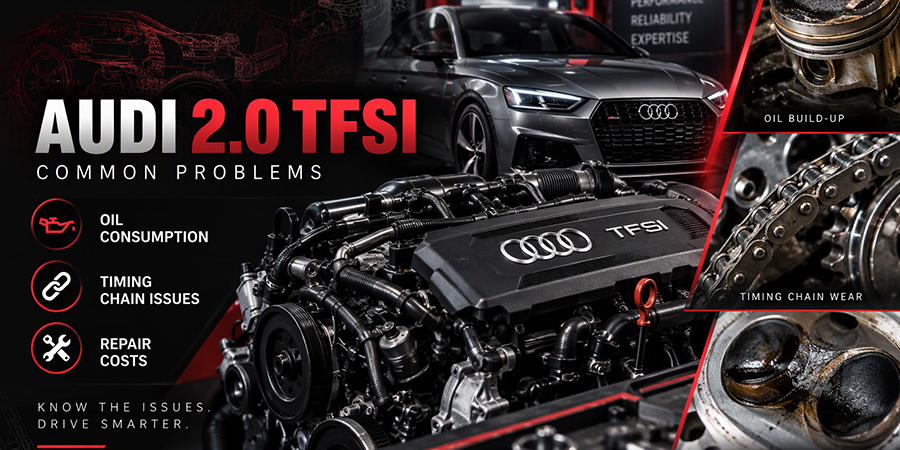
Quick answer: If your Audi is burning oil or rattling on start-up, arrange a measured oil consumption test and diagnostic checks before deciding on major engine work. Check the breather system and related components, then compare repair, rebuild and replacement options using a written quote.
What Are the Symptoms of Audi 2.0 TFSI Engine Problems?
Three complaints dominate: Audi 2.0 TFSI oil consumption that keeps climbing, a rattle for a second on cold start, and a misfire that comes and goes. This guide explains the faults discussed below, the checks to request and the repair options to compare before you commit to major work.
Which Faults Cause Oil Burning and Start-Up Rattle?
· piston ring and oil control wear on earlier EA888 builds, causing oil consumption without visible leaks.
· timing chain tensioner wear, causing a cold rattle that disappears once oil pressure arrives.
Both are progressive, and both give warning before they become terminal. That warning is your opportunity.
How Much Do Audi 2.0 TFSI Repairs Cost in the UK?
Cost guide: The figures below are estimates from this draft, not confirmed Autobahn Audi Engines quotations. Request current pricing, availability, labour and VAT details, and written warranty terms for your exact engine code.
|
Job |
Cost |
Time off road |
|
Chain, tensioner and guides |
£900–£1,600 |
3–5 days |
|
Piston ring replacement, one bank |
£1,800–£3,200 |
1–2 weeks |
|
Injector and ignition set |
£400–£1,200 |
1–2 days |
|
Reconditioned 2.0 TFSI engine |
£2,400–£3,900 |
1–3 weeks |
|
Used 2.0 TFSI engine fitted |
£1,400–£2,600 |
3–7 days |
How Much Oil Consumption Is Too Much?
Manufacturers will tell you a figure. In practice, anything over half a litre per 1,000 miles on one of these engines is a symptom, and over a litre per 1,000 miles means the rings are the problem rather than the breather system. Get a consumption test done properly rather than guessing from the dipstick.
Which TFSI Engine Generations and Model Years Are Affected?
|
Engine |
Models |
Years |
Notes |
|
2.0 TFSI EA113 |
A4, A3, TT |
2005–2008 |
Chain and cam follower faults |
|
2.0 TFSI EA888 Gen 2 |
A4, A5, Q5 |
2008–2012 |
Oil consumption and chain |
|
2.0 TFSI EA888 Gen 3 |
A4, A5, Q5 |
2012–2016 |
Much improved |
|
1.8 TFSI |
A4, A3 |
2008–2015 |
Same family, similar faults |
Confirm the code from the VIN before any work is quoted. The generations differ in parts, cost and outcome.
What Should a TFSI Diagnostic Check Include?
· A proper oil consumption test over a measured distance.
· Compression and leak-down readings.
· crankcase breather and PCV checks.
· Chain stretch measurement.
· Live data on fuel trims and ignition.
When Is Engine Replacement Worth Considering?
On a car with oil consumption caused by worn rings, sometimes the honest answer is yes, because rebuilding both banks costs as much as an exchange engine. On a car with a chain rattle caught early, no: repair it and keep the original engine number.
How Should You Maintain a TFSI After Repair?
· Oil and filter every 6,000 miles on a turbo petrol engine.
· Correct specification oil, never the cheapest.
· Breather system checked at every service.
· Any new rattle investigated immediately.
· Short journeys reduced where possible.
Audi 2.0 TFSI FAQs: Reliability, Costs and Buying Advice
Is the Audi 2.0 TFSI a Reliable Engine?
Later generations are far better. Early builds have known ring and chain weaknesses that are repairable when caught early.
How Much Does a Replacement 2.0 TFSI Engine Cost?
£1,400–£2,600 fitted for a used unit and £2,400–£3,900 for a reconditioned Audi engine at specialist rates.
Can Oil Consumption Be Fixed Without Replacing Piston Rings?
Sometimes, if the breather system or a leaking turbo seal is the cause. A proper consumption test tells you which.
Should You Buy an Audi A4 With a Replaced Engine?
With documentation, yes, and it removes the largest risk in buying an older TFSI car.
How Long Do Timing Chain Repairs and Engine Replacement Take?
Three to five days for chain work and one to three weeks for a reconditioned engine.
What Does an Oil Consumption Test Involve?
The engine is filled to a measured level, the mileage is recorded, and the car is driven a known distance, typically 600 to 1,000 miles, before being measured again. Anything else is an estimate, and estimates on these engines cost owners money in the wrong direction.
· Oil topped to a marked level and recorded.
· Mileage noted at the start.
· A defined driving distance agreed.
· Oil drained and measured at the end.
· Result expressed in litres per 1,000 miles.
How Do You Choose Between an Engine Rebuild and Replacement?
It depends on the damage and the car's value. A rebuild keeps your original engine number and can be cheaper on a single-bank problem; an exchange engine is faster and carries a clear warranty. Price both and compare, then factor in how long you are keeping the car.
What Is Included in a TFSI Timing Chain Replacement?
Front access, chain cover removed, chain measured against the marks, and the chain, tensioner and guides replaced as a set with updated parts. Then oil and filter, a fault-code read and a road test. It is a three to five day job done properly.
How Can You Reduce the Risk of Recurring Oil Consumption?
Keep the breather system healthy, use the correct oil, change it every 6,000 miles, and avoid a lot of very short journeys. On a TFSI, those four habits are the difference between a car that uses a little oil and one that uses a litre every 800 miles.
Which Related Components Should Be Checked During Repairs?
· Crankcase breather and PCV valve.
· Turbo oil feed and return.
· Cam follower wear on early build engines.
· Ignition coils and spark plugs.
· Fuel trims via live data.
What Warranty Terms Should You Check Before Buying an Engine?
Twelve months written with a mileage cap on a reconditioned engine, and thirty to ninety days on a used unit. Ask what voids the cover, and confirm whether the fitting labour is included.
Is Your Audi Worth Repairing or Replacing?
If the body, gearbox and suspension are sound and the car is worth more than the repair, repair it. If the car is worth less than the engine, the honest advice is to sell it with the fault disclosed and put the money towards something else.
What Maintenance Costs Should You Budget for After Repair?
|
Item |
Typical annual cost |
|
Oil and filter every 6,000 miles |
£220–£340 |
|
Breather and PCV check |
£60–£120 |
|
Spark plugs and coils when due |
£150–£400 |
|
Carbon clean on direct injection |
£200–£450 when needed |
|
Diagnostic health check |
£80–£150 |
Which TFSI Faults May Need Minor Repairs or Major Engine Work?
· Coil or plug misfire — cheap, diagnose and replace.
· Breather or PCV fault — cheap and often the real cause of oil use.
· Turbo oil seal failure — moderate, repair the turbo.
· Chain and tensioner wear — moderate to high, but repairable.
· Piston ring wear on early builds — expensive; rebuild or replace.
Getting the order right matters. Owners who replace an engine before checking the breather system sometimes discover the original engine was fine.
What Should You Check Before Buying a Used TFSI Audi?
· Oil consumption evidence, in writing where possible.
· Service history with short oil intervals.
· Cold start observed, listening for chain rattle.
· Fault-code read for timing and mixture faults.
· Breather system condition, since it affects oil use.
Rebuild vs Reconditioned vs Used Engine: Cost, Time and Warranty
|
Route |
Cost |
Time |
Warranty |
|
Rebuild your own |
£2,000–£3,400 |
2–4 weeks |
Variable |
|
Reconditioned exchange |
£2,400–£3,900 |
1–3 weeks |
12 months written |
|
Used engine fitted |
£1,400–£2,600 |
3–7 days |
30–90 days |
What Aftercare Should You Discuss for the First 500 Miles?
Gentle driving, an oil level check every few days, and an oil and filter change at 500 miles. Turbo petrol engines accumulate debris in the oil during bedding in, and on a TFSI, clean oil protects both the chain and the turbo.
How Can Documented Engine Repairs Affect Resale Value?
A documented repair with a warranty usually protects value, because buyers of older TFSI cars are wary of exactly these faults. What harms value is an unexplained oil consumption problem with no paperwork, which is the very thing a professional repair removes.
What Should You Do Before Paying for Major Engine Work?
Do a measured oil consumption test first, check the breather system, and only then decide between rebuilding and replacing; on these engines the cheapest fault and the most expensive one look identical from the driver's seat.
Discuss Your Engine Options with Autobahn Audi Engines
Autobahn Audi Engines supplies used and reconditioned engines, with supply-and-fit options and nationwide delivery. If you are comparing replacement Audi engines, share your model, registration or VIN, engine code, mileage and symptoms. Request a written quote confirming compatibility, what is included, availability and warranty terms before ordering.
Looking for used Audi engines or advice on the next step? Contact the team to discuss your requirements.
Explore Audi engines, gearboxes and ancillaries or learn about our engine supply and fitting services.
External sources: GOV.UK MOT manual on emissions and engine defects; Audi technical information on EA888 oil consumption and chain revisions.

